forge-docs
Documentation
The Forge Platform consists of the following discreet repositories:
| Repository | Visibility | Description |
|---|---|---|
| forge-kit | Public | Infrastructure components for Quarkus services: rate limiting, metrics, health checks. |
| forge-core | Private | A zero-trust, horizontally scalable microservices platform built with Quarkus, and deployed on AWS. |
| forge-platform | Private | A filtered mirror of forge-core that clients will fork, own and run with a licence. |
| forge-docs | Public | This public documentation repository. |
forge-kit is open-sourced and intended as a
limited but useful showcase of operational best practices that anyone can re-use with
existing Quarkus services. It is also a working dependency of forge-core.
How it works
- You purchase a Forge Platform licence file from the Forge Platform website.
- Your organization is added as a Contributor, so you can fork the forge-platform repository.
- You then own and develop that forked codebase.
- You provision the provided CI/CD workflows in your own GitHub account (works in free tier GitHub Actions).
- You deploy the platform to your own AWS accounts (development works in free tier AWS).
- You receive any future platform updates by syncing your fork to the upstream
forge-platformrepository.
What you get
Out of the box, the Forge Platform provides you with the following:
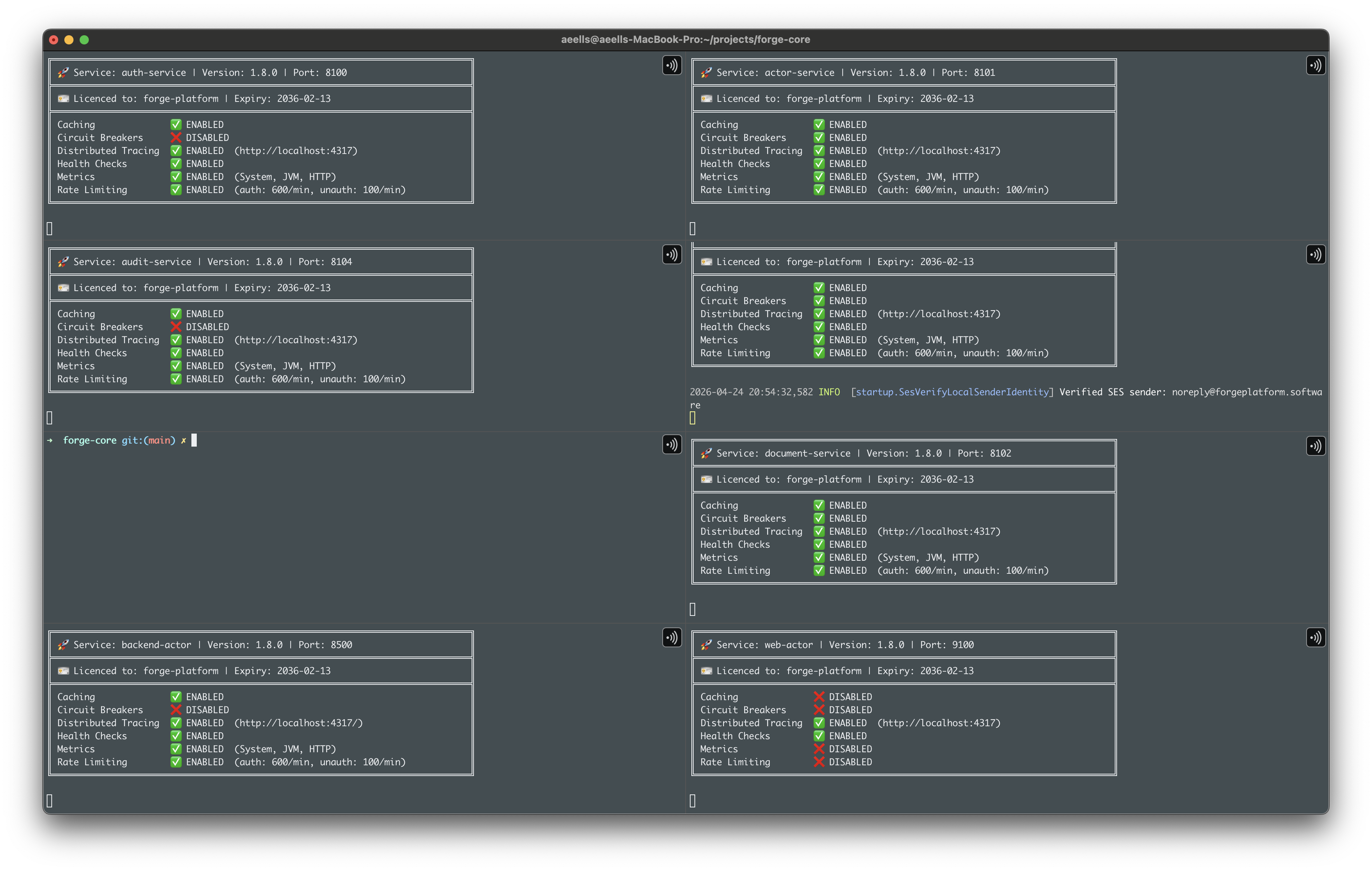
- A development environment built predominantly on free tier LocalStack that emulates AWS in full and spins up in seconds.
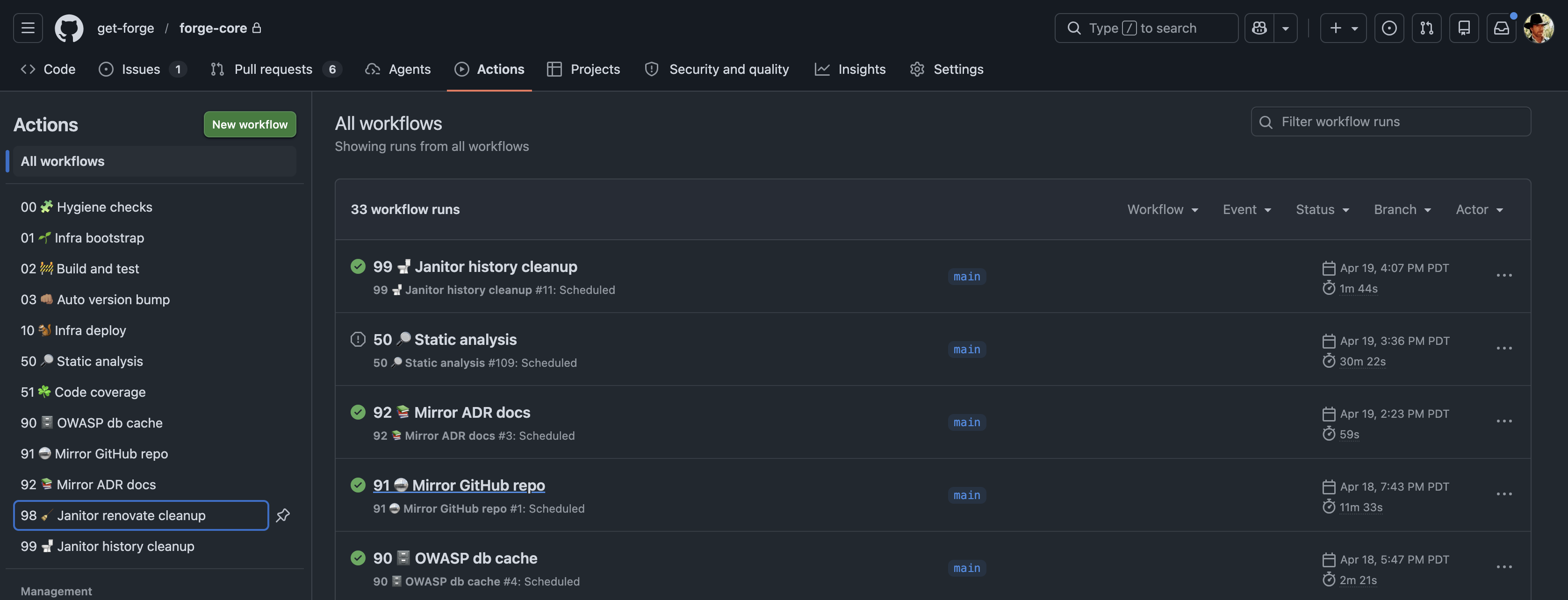
- An entire GitHub Actions pipeline which includes release automation; ECS deployments (diffed services only); infrastructure deployments (CDK); static code analysis (OWASP, SpotBugs, etc); code coverage, unit/integration test reports, and more.
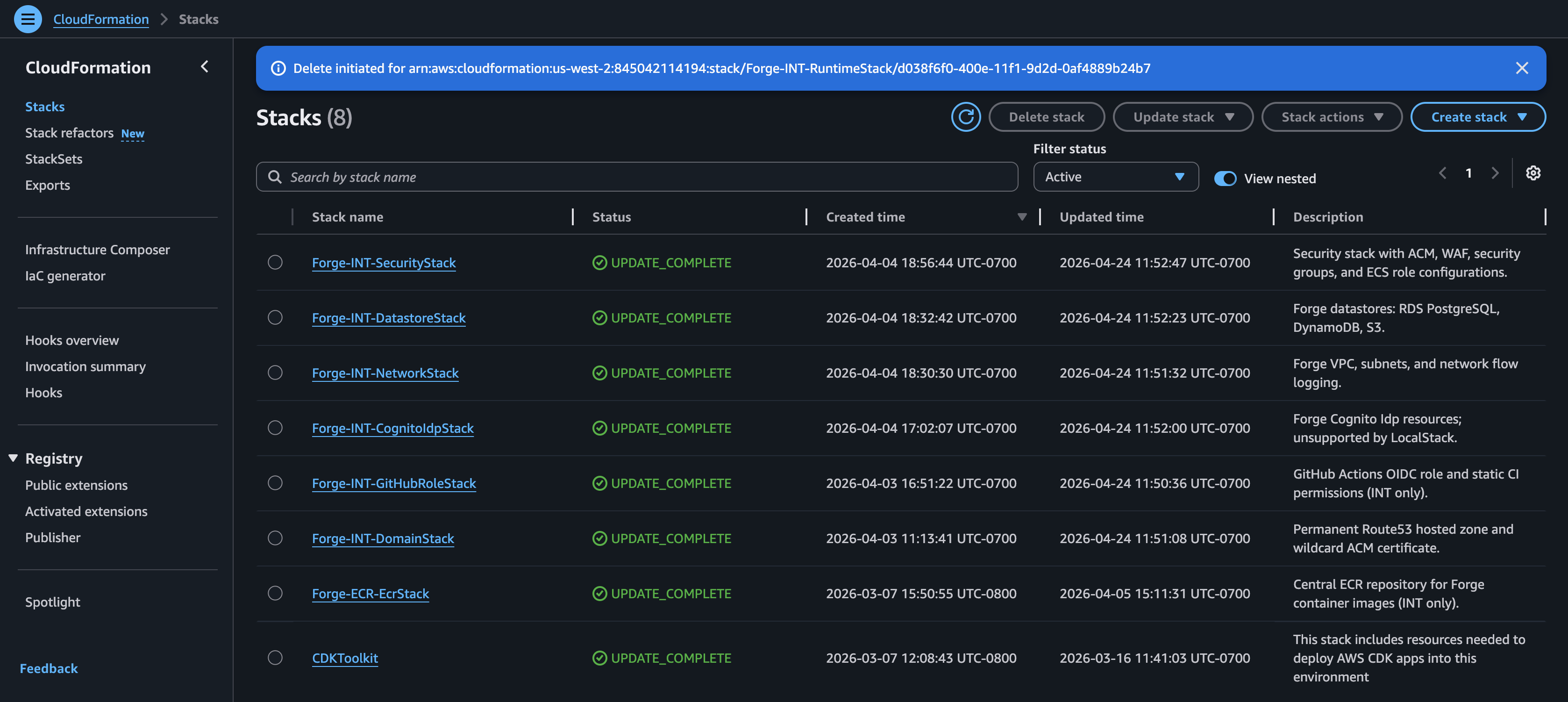
- Full IaC support and repeatable automation for AWS environments, including thoughtful segregation of stateful vs stateless resources.
- A clean, well-documented, and well-tested codebase that you can fork and modify.
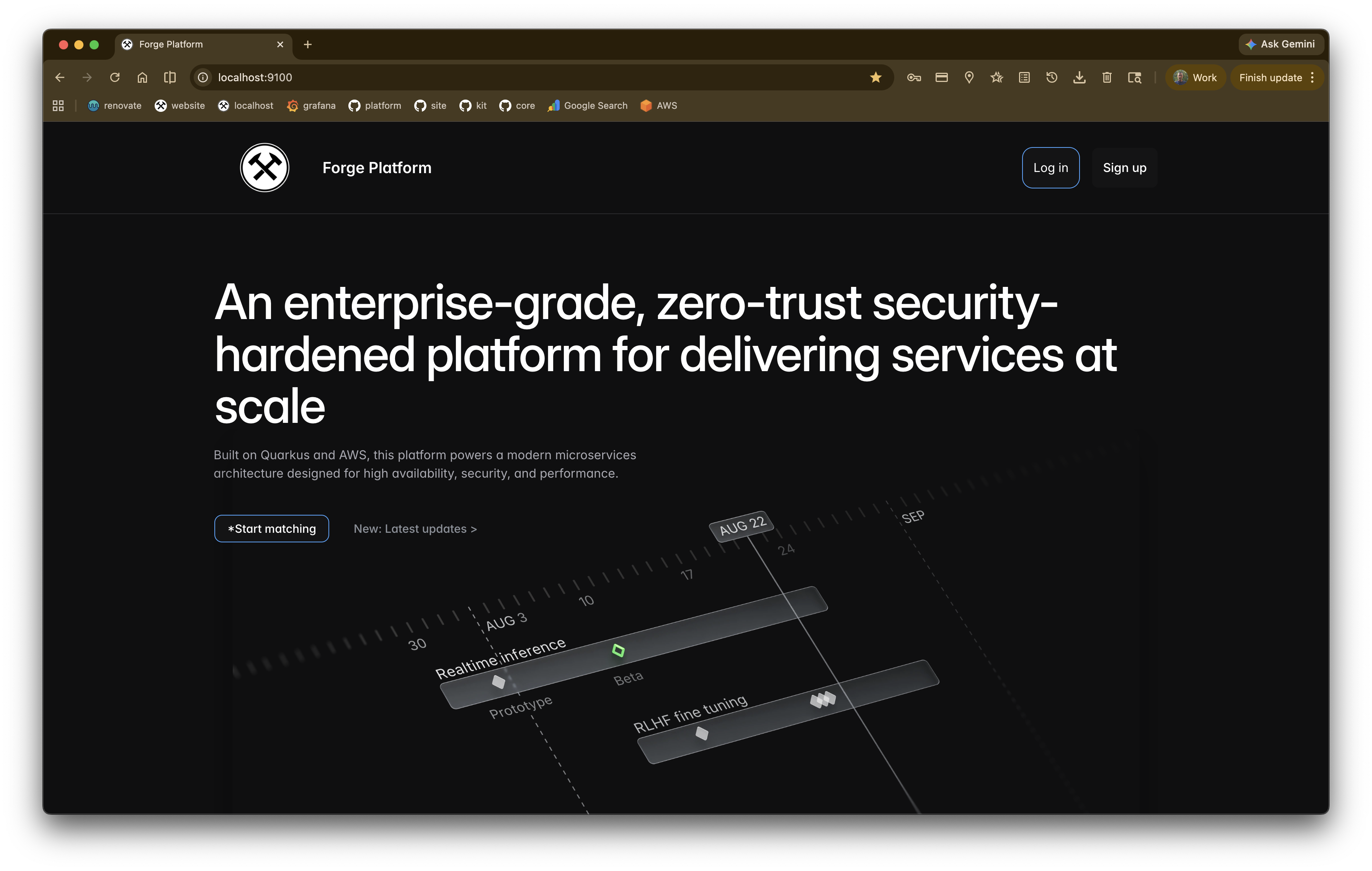
- A stateless reference web application that you can deploy locally and to AWS and use immediately.
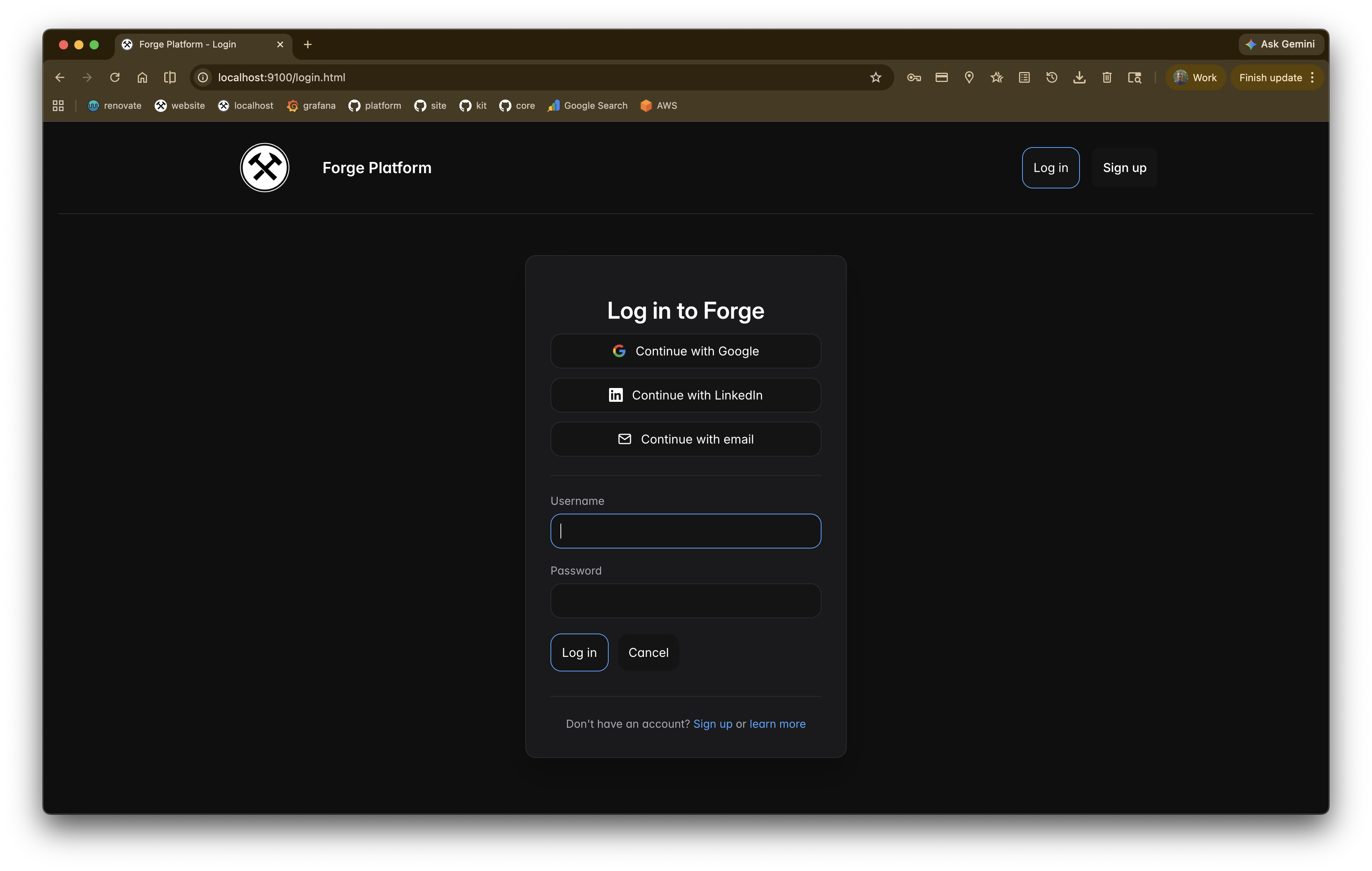
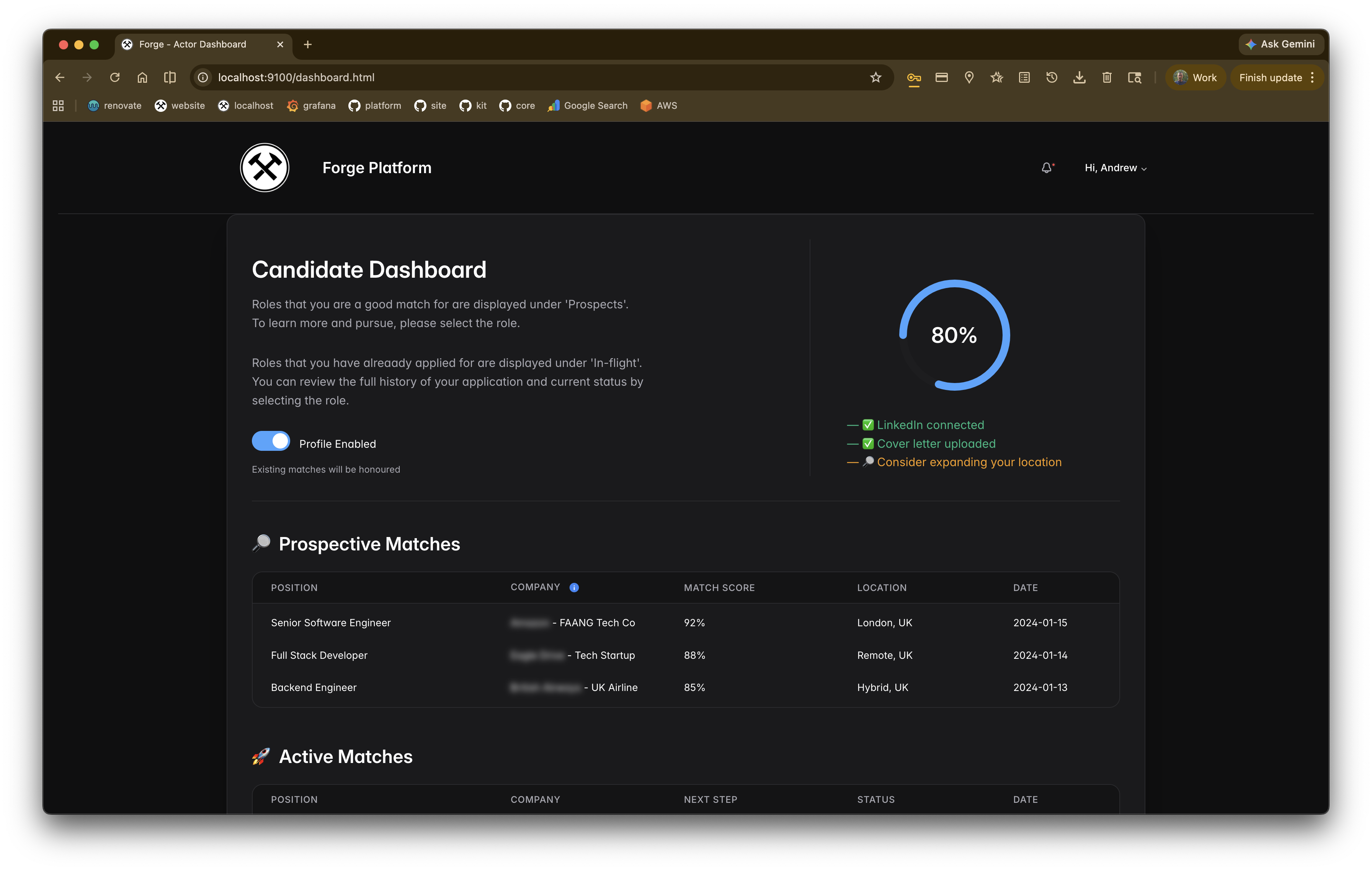
- The following foundational services provide the base for you to build domain services (e.g. search, quote, booking, etc.):
- actor-service; canonical user profile and identity-linked domain data
- audit-service; immutable event and action trail for compliance and observability
- auth-service; JWT issuance, validation, and user/service authentication workflows
- document-service; document metadata, storage orchestration, and retrieval APIs
- notification-service; template-driven outbound messaging and delivery orchestration
- The following edge services that provide client-facing composition and delivery layers:
- backend-actor; BFF orchestration tier
- backend-web; disposable reference UI and consumable frontend
- Comprehensive Prometheus metrics and Grafana dashboards for observability.
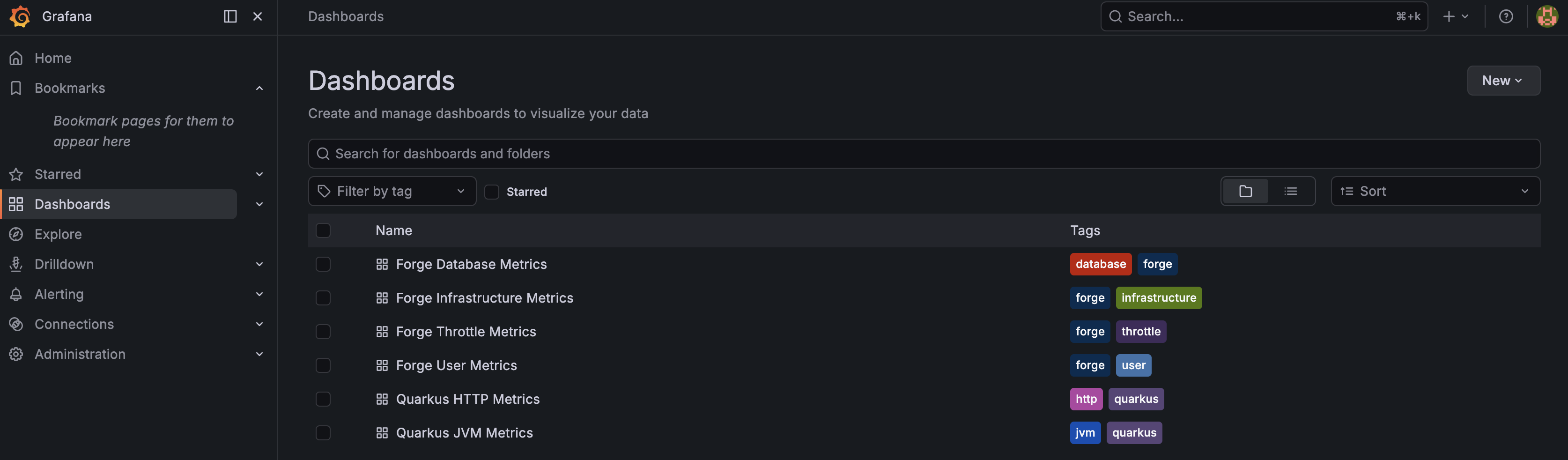
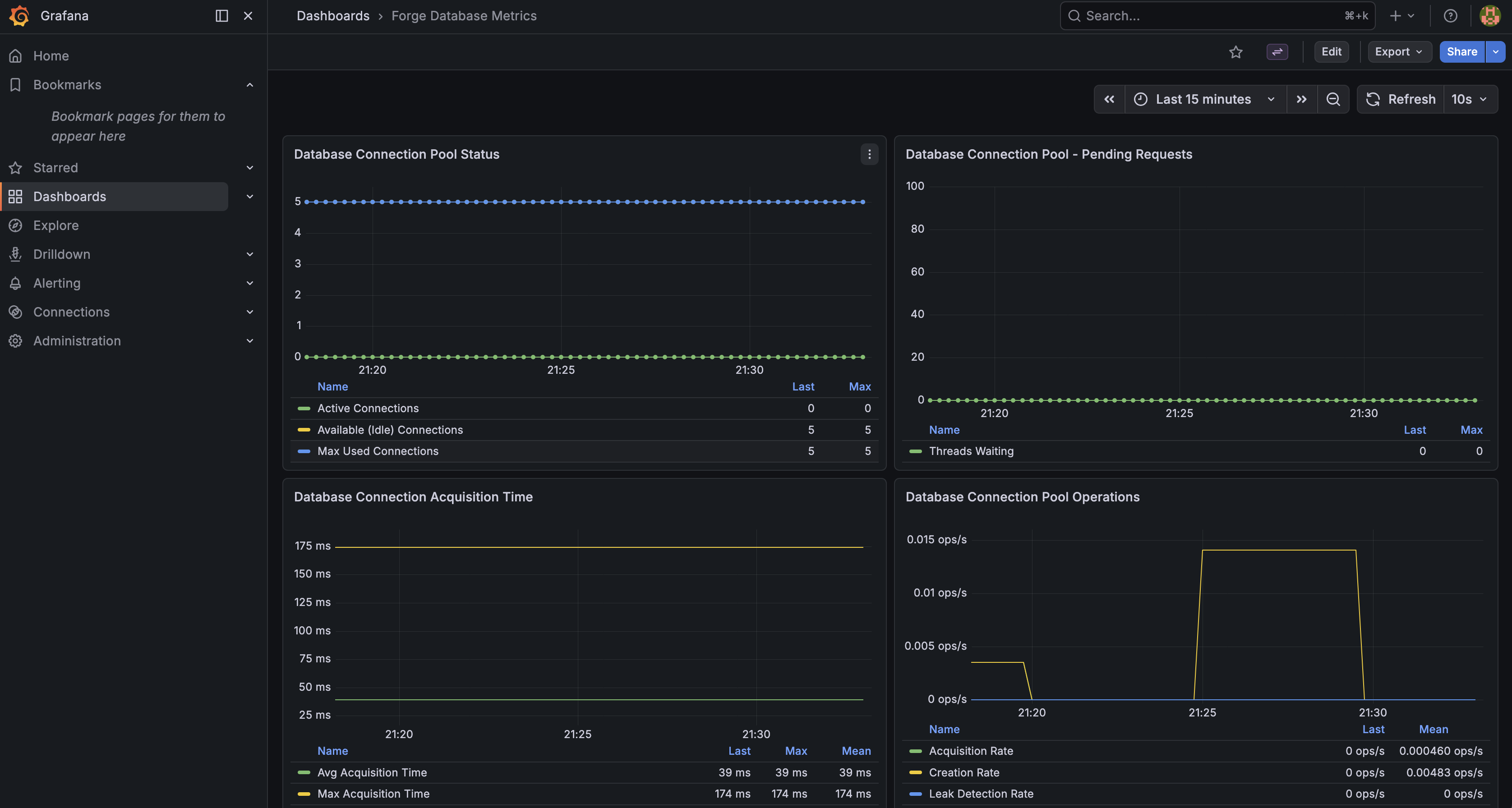
For the complete list of platform features, see the FEATURES.md file.
Deployment architecture overview
Workloads and services
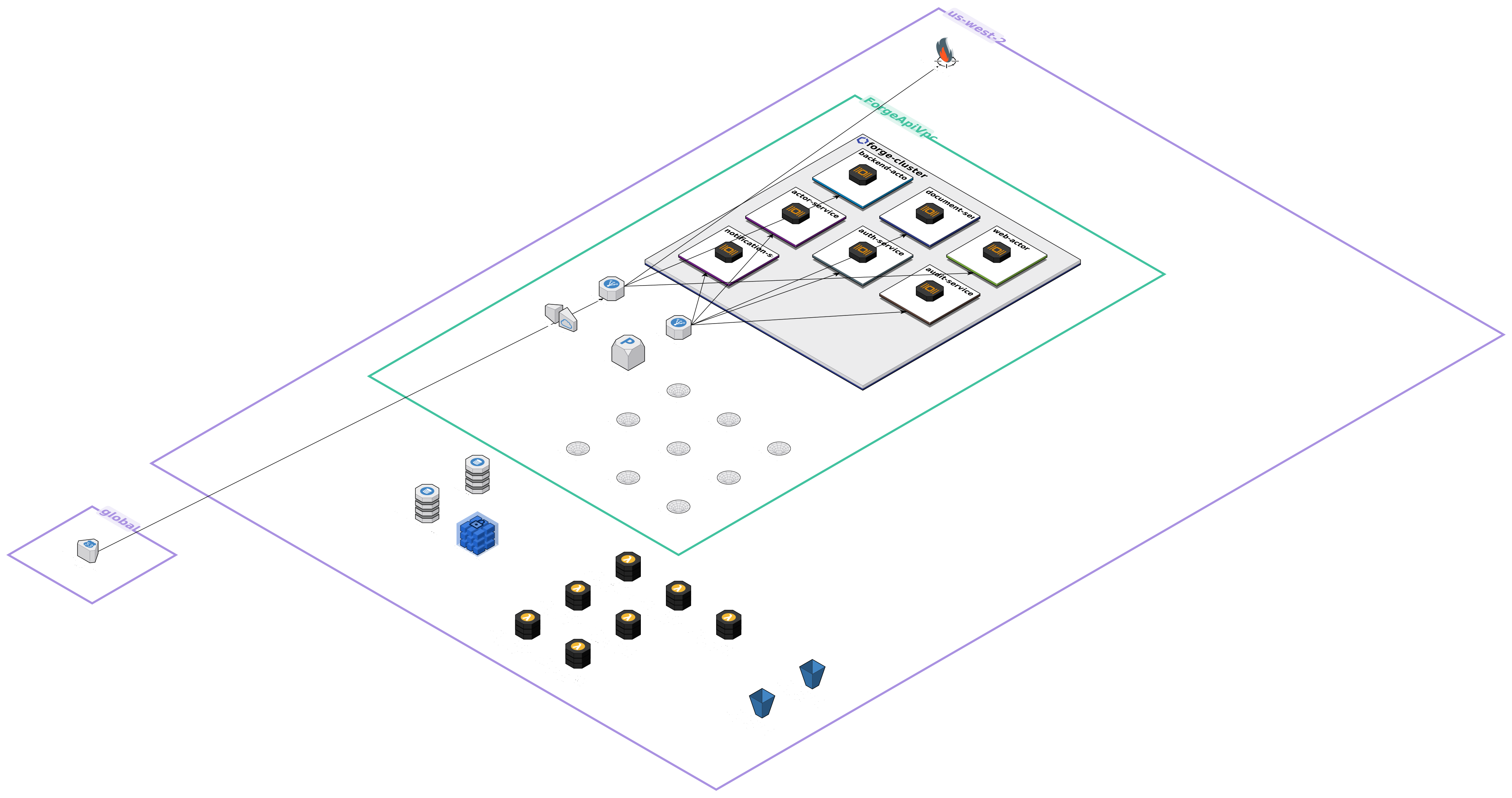
VPC / network
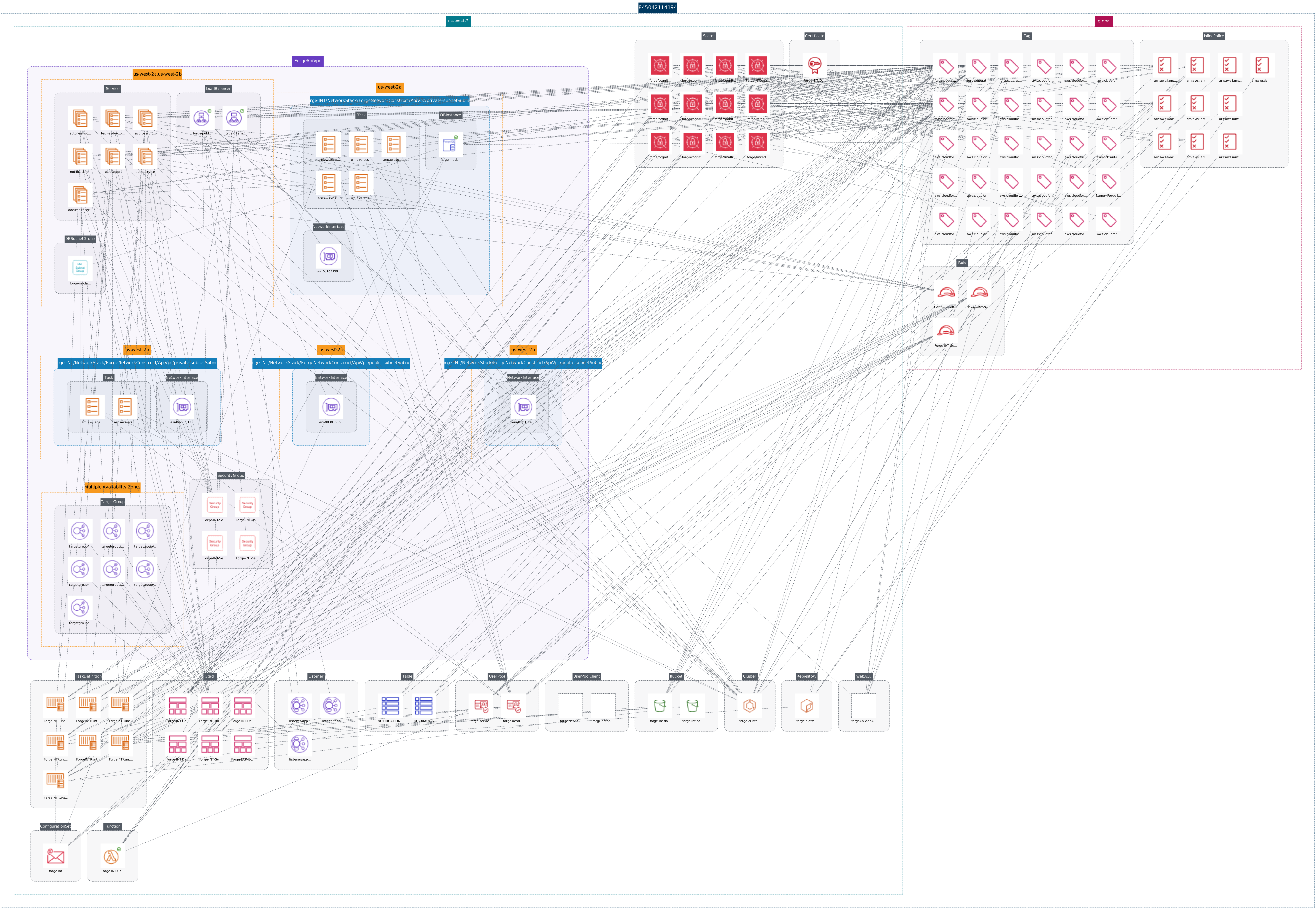
In-depth guides
| Guide | Description |
|---|---|
| USER_AUTHENTICATION.md | JWT, Cognito form login, LinkedIn OAuth, filters, and OIDC configuration. |
| SERVICE_AUTHENTICATION.md | Service accounts, @AllowedServices, client filters. |
| CACHING.md | Quarkus Cache names and where they apply. |
| METRICS.md | Micrometer, /q/metrics, forge-kit metrics, local Grafana. |
| HEALTH_CHECK.md | Readiness checks, forge-health-aws, per-service wiring. |
| AUDIT_SERVICE.md | Audit library and audit-service HTTP ingest. |
| NOTIFICATION_SERVICE.md | Notification delivery, templates, SNS webhook spec. |
Architecture Decision Records (ADRs)
ADRs are historical why records (context, trade-offs, alternatives). The full public index, redaction scope, and links to each decision can be found in architecture/ADRs.md.
Onboarding and operations runbooks
- README.md — first screen on GitHub; fork and setup narrative
- DEVELOPMENT.md — local dev, tooling, licence, Quarkus
- OPERATIONS.md — GitHub OIDC, Actions, CDK, AWS/LocalStack
- CHEATSHEET.md —
taskindex and copy-paste - infra/README.md — CDK layout and entry points